The reality of GDPR in Romanian e-commerce
I analysed 1,000 online stores between March and August 2025. The conclusion: 80% of them are not GDPR compliant. Learn how to protect yourself from tracking and data collection practices as a user, and how to fix the problem as an online store.
Vasile Dingă
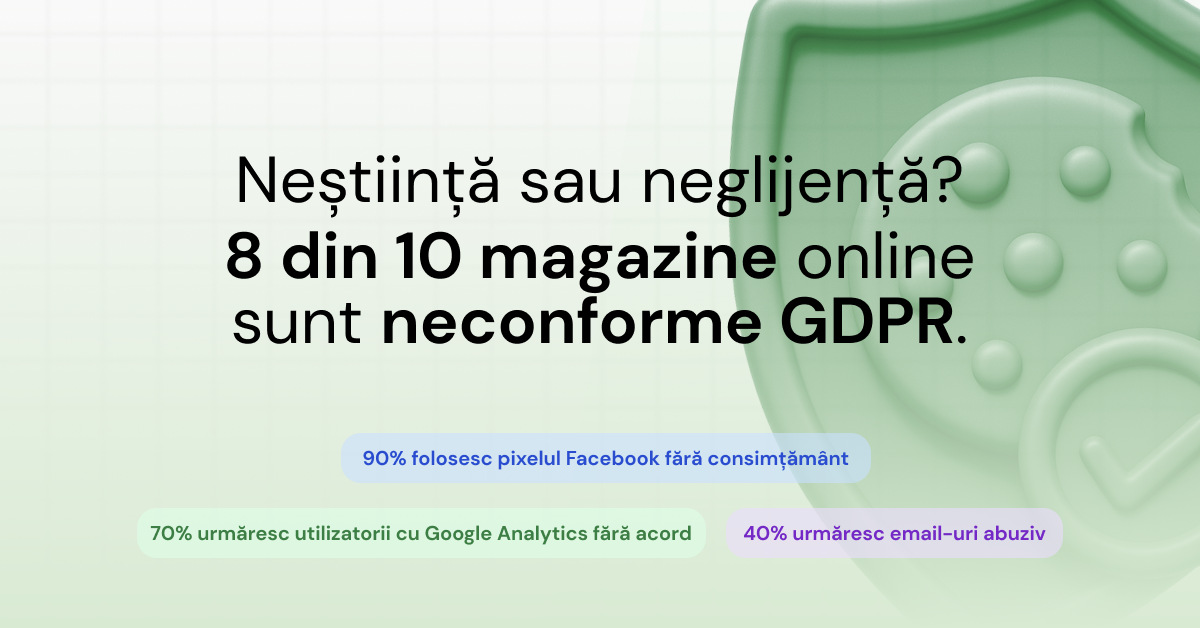
.comparison-cards { display: flex; flex-direction: column; gap: 1.5rem; } .comparison-card { background: #fff; border-radius: 16px; padding: 20px; border: 2px solid #efefef; } .comparison-header { display: flex; justify-content: space-between; font-size: 16px; margin-bottom: 12px; } .comparison-row { display: flex; justify-content: space-between; padding: 8px 0; border-top: 1px solid #efefef; font-size: 14px; color: #1f2937; } .comparison-label { font-size: 14px; width: 100%; } .comparison-value { width: 100%; text-align: right; } @media (max-width: 600px) { .comparison-row { flex-direction: column; align-items: flex-start; } .comparison-value { text-align: left; margin-top: 4px; } } I put this report together to get a detailed, expert-level picture of how Romanian online stores comply with the General Data Protection Regulation (GDPR). An in-depth look at market practices, based on the audit I carried out recently, revealed a non-compliance problem across thousands of websites. Findings from the field, based on my direct audit starting on 14 March 2025: I found that 8 out of 10 online stores are not set up according to GDPR requirements. Roughly 90% of the sites I audited had the Facebook pixel permanently active , without obtaining the user's prior consent (the cookie consent banner was there just for show). It is a common practice among advertising agencies to mark these cookies as mandatory. Roughly 70% used Google Analytics to track visitor behaviour without implementing proper consent mechanisms for tracking. Roughly 40% used email marketing tools that, after a newsletter sign-up, silently captured email addresses as soon as they were typed into a login or checkout field, ignoring the requirement for explicit consent. The subscriber was then tracked inside that tool from that point on. These concrete figures show how serious the situation is and back up my conclusions, which also rely on the official data published by the Romanian Data Protection Authority…