Product descriptions that sell: structure, mistakes to avoid and before/after examples
How to write product descriptions that answer "is it for me?": structure, tone, SEO without stuffing, unique copy, a before and after example, a template and a test.
Vasile Dingă
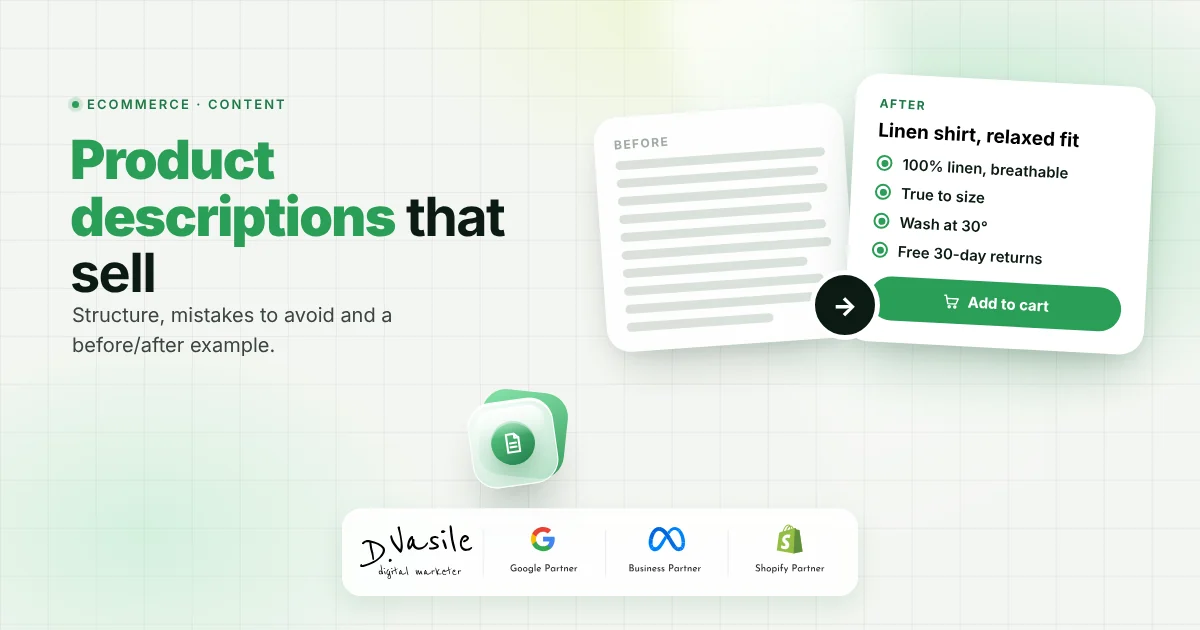
The product description is where the customer decides whether the product is for them. Photos draw them in, the price stops them or not, but the text answers the questions that would otherwise reach you by phone, lead to an abandoned cart or end in a return. Below is the structure I use, the most common mistakes, a before and after example and a template you can reuse. 1. The structure of a description that sells The first lines: "Is it for me?" On a phone, the customer usually sees only the first two or three lines before deciding whether to keep reading. Use them to say who the product is for and what problem it solves. Don't start with the brand name, with "product of the highest quality" or with the company's history. Benefits, then specs A spec says what the product is, a benefit says what it does for the customer. "Double-walled stainless steel" is a spec. "Your coffee is still hot at lunchtime" is the benefit. Write the benefit, then add the spec that backs it up. Short, scannable lists Three to five bullets with the main benefits, one per line. Customers don't read a description from top to bottom, they scan it. The practical details Dimensions and weight , with clear units. For clothing, the size guide and the height of the model in the photos. Material and composition , exactly, not "premium materials". Care: machine washable, at what temperature, dishwasher safe or not. What's in the box: the product, the accessories, charger included or not, batteries included or not. Delivery and returns A short sentence next to the description or the buy button: when the order arrives and how returns work. No need to repeat the whole policy, just remove the doubt. More elements that matter on the page are in the product page that sells checklist . 2. Tone Write the way you'd explain the product to a customer in a shop. Short sentences, simple words and a consistent way of addressing the customer across the store. Avoid empty superlatives ("the best", "revolutionary",…