Pre-orders: successful collection launches, without the risk
A pre-order isn't just a deposit, it's a smart strategy. Discover how this business model is transforming premium brands in Romania by improving cash flow, reducing risk and building loyalty.
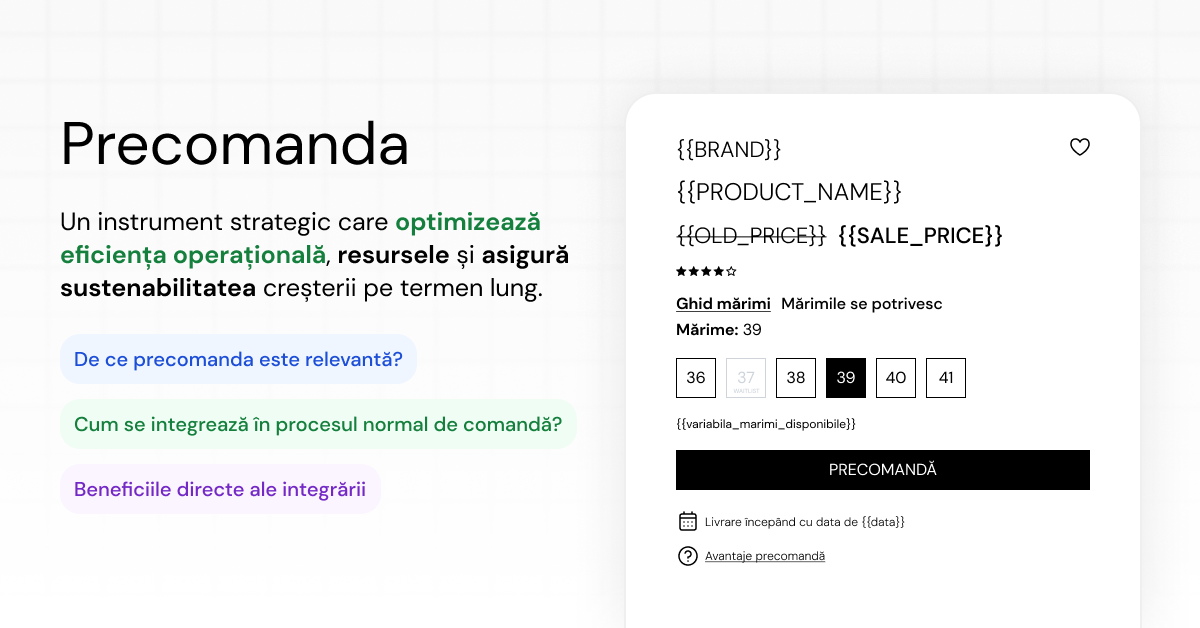
Pre-orders, a strategic lever for the success of Romanian brands
In today's business environment, premium brands in Romania face a series of complex challenges. Production costs are high, demand fluctuates, pressure on cash flow is constant and customer expectations keep rising. In this context, the pre-order model is no longer just a temporary fix, but a fundamental strategy that can transform sales, improve operational efficiency and strengthen the relationship with your target audience.
The core benefits of pre-orders for brands
A premium brand stands out through the quality of its materials, flawless design and attention to detail. These require significant investment before a single product is sold. This is where pre-orders come in, offering crucial advantages:
-
Better cash flow: By collecting part or all of the payment before production, pre-orders reduce financial pressure. The brand no longer has to lock up substantial capital in stock, so it can launch new collections more often and put resources into other strategic areas, such as marketing or innovation.
-
Lower risk of unsold stock: For a premium brand, aggressive price cuts can damage the perception of exclusivity. Pre-orders remove this risk by allowing you to produce exactly the number of items ordered, plus a small reserve for the showroom or for possible exchanges. This model ensures better inventory management and protects the value of the brand.
-
Validating collections: Pre-orders work like a real-time market survey. The data collected, such as preferences for certain models, colors or sizes, provides essential feedback. This information allows quick adjustments before mass production begins, ensuring the products you launch are the ones customers actually want.
-
Creating exclusivity: A product available only through pre-order creates a sense of urgency and of belonging to a select group. Customers feel special because they get priority access to unique products, which strengthens loyalty and turns them into true brand ambassadors.
-
Supporting sustainability: Production based on real demand significantly reduces wasted materials and energy. This greener approach is highly valued by today's premium customers, who are increasingly aware of the social and environmental impact of their buying decisions.
Adding pre-orders to your sales process: simple, effective steps
Adding pre-orders to your sales process doesn't mean reinventing your business, but strategically adjusting your existing workflows. Pre-orders can run perfectly well alongside the classic sales model.
1. Choosing the products and communicating transparently
Not every product is suited to pre-orders. They work best for:
-
New products that need market validation.
-
Limited editions or special collaborations.
-
Relaunches of best-sellers in new colors or finishes.
It's essential for the product page to clearly show labels such as "PRE-ORDER", together with an estimated delivery date (for example, "Shipping from: 18.08.2025"). A short description of the process (order → production → delivery) and a transparent return policy will build customer trust.
Interactive form simulation for the product page:
Checkout display simulation:
2. Adapting payment methods
Flexible payment options are key. An e-commerce platform can be set up to offer:
-
Cash on delivery when the customer receives the product. Here there's a chance the customer won't complete the purchase in the end for various reasons, so the retention rate should be measured in order to optimize the pre-order process later.
-
Full payment when the order is placed.
-
Partial payment (deposit), with the rest paid on delivery. This process requires more operational checks, which can be done manually or automatically.
-
Direct payment in the showroom for local customers who prefer a personal experience. This payment can also be made in advance.
These options can be integrated into your existing payment processor, simplifying the buying experience.
3. Automated, transparent communication
A successful pre-order process relies on flawless communication. Your e-commerce system or email marketing platform can be set up to automatically send:
-
A detailed confirmation email.
-
Notifications when the product goes into production.
-
Regular updates if timelines change.
-
A shipping confirmation with the tracking number.
This proactive communication keeps customers informed and cuts down on repetitive questions, while also strengthening trust in the brand.
4. An efficient link with production and logistics
Once the pre-order period ends, orders are grouped by model, size and color. This data goes straight to production. Internal systems (ERP) or even a simple export from your e-commerce platform can simplify this step. For delivery, the brand can either ship all orders in a single batch (optimizing courier costs) or deliver as products are finished (giving customers a faster experience).
5. Clear after-sales policies
To build a long-term relationship, it's vital to have clear return and exchange policies tailored to pre-orders. If delays are unavoidable, open communication and possibly some compensation (a voucher or a discount) show the brand's respect for its customers.
Conclusion
Pre-orders aren't a substitute for classic sales, but a smart, strategic addition. By integrating them well, a premium brand can gain financial and logistical predictability, launch collections with minimal risk, build a closer relationship with customers and position itself as a responsible, exclusive brand in an increasingly competitive market. It's a powerful lever that, used correctly, can become a defining element of long-term success.