A fast, measurable, multilingual online store: the foundation for growth
Mobile speed, GA4, Meta and TikTok tracking with consent, several languages with translated URLs and emails, and the store's daily dashboard.
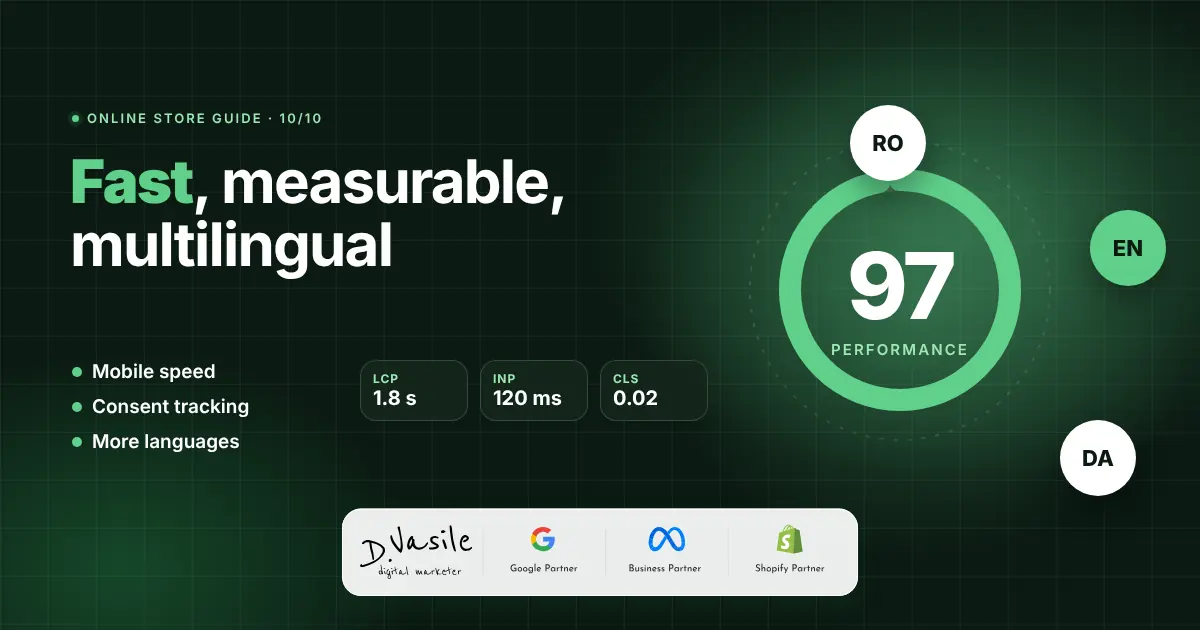
The last article in the series is about the foundation that all the previous features stand on. A store can have the best design and the best features, but if it loads slowly on mobile, if you don't know what your ads bring or if it can't sell in another language, growth stops. Here are the three parts I look at in every store. This article is part of the series on how to build an online store.
1. Speed
Speed matters most on mobile, on mobile data, on product and category pages. I explained the link to sales in site speed and Core Web Vitals. What affects it most:
- The theme. Heavy themes and page builders load hundreds of kilobytes of code on every page. A theme written mainly in PHP and CSS, with very little JavaScript, starts with a big advantage.
- Images. WebP or AVIF, at the size they're displayed, lazy loaded below the first screen.
- Plugins. Each plugin can add scripts to every page. Keep only what you use and load scripts only where they're needed.
- Marketing scripts. Pixels, chat and external review widgets are often the heaviest parts of the page.
- Hosting and caching. A good server and caching on pages that aren't cart or account.
2. Measurement, with the customer's consent
Without correct data, every budget decision is a guess. The minimum foundation:
- GA4 with ecommerce events: view item, add to cart, begin checkout, purchase.
- The Meta pixel and, if you run campaigns there, TikTok, with the same events and values.
- A cookie banner that actually blocks tracking until consent and Consent Mode v2 for Google.
- Regular checks: store orders should roughly match purchases in reports. Big differences mean lost or double-counted conversions.
3. More languages and more countries
When you want to sell in another country, you need more than a translate button:
- Separate URLs per language, for example /en/ and /da/, with translated product and category URLs.
- Hreflang, so Google shows each country the right version.
- Everything translated: products, categories, menus, theme texts, emails, legal pages.
- Emails in the order's language, not the language set in the admin.
- Delivery, payments and prices suited to the country, plus separate campaigns, as in separate campaigns by country.
The store dashboard
The last piece is for you, not the customer: a first admin page showing at a glance the day's sales, orders to prepare, new returns, products running low, scheduled gift cards and recovered carts. When you see these numbers daily, problems get noticed before they cost money.
How I build the foundation
My themes are written mainly in PHP and CSS, without a page builder or heavy libraries, and the big features are modules you switch on only if you use them: a module that's off loads no code at all. Tracking for GA4, Meta and TikTok starts only after consent, the store can run in several languages with translated URLs and emails, and the "Store today" dashboard shows what matters every morning.
Check yourself
Frequently asked questions
Conclusion
Speed, correct measurement and readiness for other languages don't show in the design, but they decide how far the store can go. You put them in during the build, not after the first year. If you'd like to check your store's foundation, see the data analytics page or write to me via contact.
Free check: find out in 5 minutes how much budget you're losing in Google Ads and Meta Ads. Answer 15 questions and get a score and a list of things to fix. Take the free check.